73 cows
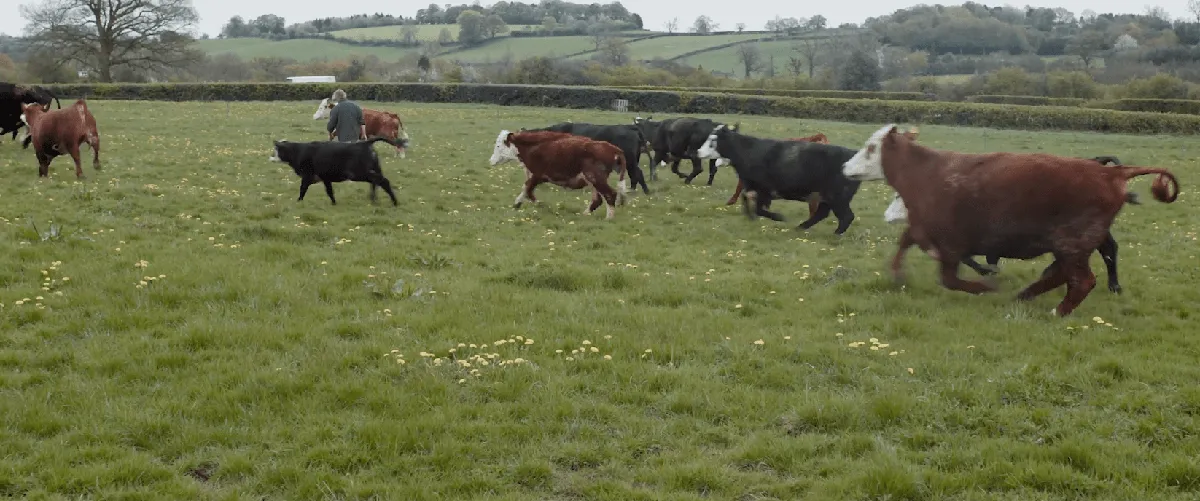 For years I've been meaning to re-watch 73 Cows. I'm only half-joking when I say this 15-minute film was one of the best things that came out of me using Mailchimp for work for four years; Mailchimp was doing a thing where it would release short videos, and this one showed up on my login sidebar one day, years ago. It moved me then and I had a feeling it might move me even more now. I teared up before I clicked play.
Why did I revisit it today? I'm wondering this for myself, because I'm wondering about the individual journey each of us takes in our lives towards that moment of taking action on our values, of making a change. Making change is hard, even (especially) when it's changes that reflect values we really care about. I think I chose to re-watch the movie today because I listened to an interview with Joyce Tischler, the "mother of animal law," on the How I Learned To Love Shrimp podcast. It was clear to me that Joyce cared about the cases she worked on--like, really cared. Cared so much that it was painful. I noticed this because it made me wonder (and long for) the feeling of caring that much. I know enough to care. But I think I have some subconscious processes that can dampen my feelings. The processes are trying to protect me, even though they're not consistently adaptive anymore. I'm going off-topic. Joyce also talked about how legal advocacy for animals can dovetail with media and campaigns. There was this case she shared, where footage was recorded at a slaughterhouse that showed "downed" cows--unable to walk--being tortured and forced to enter the slaughterhouse so they could be slaughtered. People were shocked and moved to action when they saw the footage. Perhaps what compelled me to rewatch 73 Cows today was that combination of wanting to feel deeply, and that memory of how much a piece of media impacted me.
I was right in that the film did deeply move me when I rewatched it this morning. I sobbed throughout. I felt so moved by how the farmers were really saving themselves by saving their cows, by gradually turning their family farm into a vegan organic farm. We can never rewatch the exact same piece of media (or read the exact same book) because we are always changing and therefore wearing new "glasses." What I brought to this watching was my newfound awareness and curiosity about patriarchy and gender conditioning. The protagonist of the film, Jay, is striking in his tenderness and sadness. I really saw how he was being oppressed in this system that forces him to enact violence (and significantly, what he sees as violence) because he is a man that has inherited a farm from his father, and that this is what men who farm cattle do and how they do it. There is a softness to Jay that many I believe would judge as weakness. I myself had to catch myself and remind myself that his softness really is strength. Even after a while steeped in feminist thought, it can feel confronting, even scary, to see a man show vulnerability. The "flinch" that I felt in that moment is common, I think--to push that softness away or judge it as bad, because it's uncomfortable, because of how patriarchy has told us that to be a man is to be strong, and that to be strong is to dominate others.
73 Cows is a story of liberation as much of for the cows as for Jay. There is no selective dampening of being. Repression is a crude tool, and when we repress some of our feelings, we repress multiple aspects of our being. Jay's partner katja says that the biggest change they're seen is that Jake now "talks more about what he's thinking and planning and what we're doing, and that is just so beautiful to see."
This film is honestly one of the most powerful pieces of media I've seen so far about animal agriculture and the harm it does to everyone involved. It made me feel like I just had to do something--and wanted to. Today what I'm doing is sharing it. If you watch it I'd love to know how you experienced it. It's available for free here on Vimeo: https://vimeo.com/293352305.