The names in Eastern Cape, South Africa
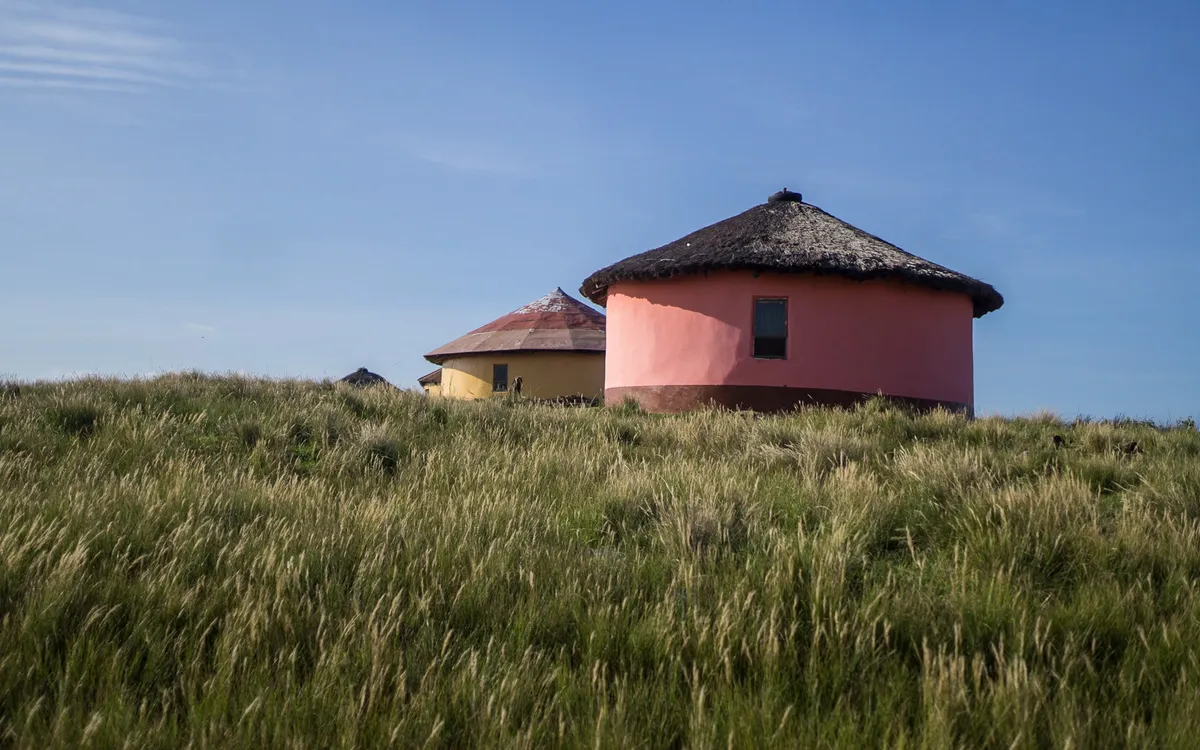
How my thoughts developed when I got a little more curious about the names in South Africa, as I put faces to more of them .
When Corne called where we stood near the Indian Ocean the “Cape Province” of South Africa, we judged him as a dinosaur. You know the saying about old habits, and Corne was pretty old, well into his seventies. I’m twenty nine, about six years older than the end of “Transkei” being a nominal republic deemed illegitimate by everyone except its creators and their collaborators. Yet I’m using this name all the time,
“We cycled through part of the Transkei;”
“We loved our time in the Transkei!”
At the end of the apartheid regime in 1994, the sprawling Cape Province was split, mainly into the Northern Cape, Western Cape and Eastern Cape Provinces. We met Corne in Eastern Cape Province, which incorporated Transkei in 1994—a move that brought it officially back into South Africa. In previous decades Transkei had been a bantustan—a region where people from a particular ethnic or language group were forced to live, in many cases at the expense of their South African citizenship.
Transkei was the larger of two bantustans for people that spoke Xhosa, and Nelson Mandela grew up here. Decades later, so did Jali, who isn’t famous for anything. Jali was just one of a few South Africans working in Kenya on a construction site with Evan. We were there for months, and most mornings ate together in the hotel’s breakfast room. We teased Jali for how much he sweetened his coffee (four, sometimes five sugar packets), and he made fun of how much coffee I drank (three, sometimes four cups). In between the banter, we asked questions about growing up Xhosa in Transkei. Sometimes he made it clear that he didn’t appreciate us turning breakfast until another interrogation. And yet I can’t think of a single question he didn’t eventually answer, often in the form of a personal story. One of my favourites was about his struggles as a student; his homework was doomed because he’d fall asleep whenever he started reading at home. In desperation he forced himself to sit at the front of the class and immediately ask the teacher whenever he had a question. This strategy worked so well that now, decades later, he still understands those concepts well enough to help his kids with their homework.
I remember wondering if these conversations between us were possible because we were having them in Kenya, not South Africa. At home, it can be tough to take what’s being said at face value. Precedents and history and current events insidiously direct how you talk, what you talk about and who you talk with in the first place.
When we rode through the Transkei, we weren’t sure if Jali was there, because we didn’t contact him. I could be wrong, but it felt like we knew too much—like an uninhibited vacation fling that happens only because everyone was far from home, and who they usually are. In lieu of seeing him, I was often reminded of him as we navigated the winding dirt roads that snake down and up steep river valleys.
Evan and Jali spoke at length about the Xhosa word for an uncircumcised male, and what the importance of that word says about the culture. They eventually got in a fight about it and with that, we dropped the topic. This was after several conversations about gender roles and genitalia, and I’m glad the fight didn’t take place earlier. It felt I’d been permitted a look into a world meant to be kept away from me, as a woman and especially a foreign woman. In Jali’s Xhosa culture, you’re not a man until you pass through a secretive initiation ceremony, which includes circumcision and other rites. Your role in your family and community depends on whether you’ve undergone it yet or not, from boy to man.
One afternoon in the Transkei, we talked with a man named Manguele next to his homestead, a cluster of rectangular and round buildings. He made a vague reference to the initiation ceremony as he chatted to us about what his sons were up to. I wanted to impress him with my knowledge. Regrettably, I chose to do this by blurting out the word for uncircumcised boys, the word that Jali was so sensitive about. Evan shot me a dirty look. Manguele pretended not to hear and changed the topic. It was in moments like these that I was brought back to breakfasts with Jali, and reminded of just how generous he was with his stories and what they included.
Back then, what Jali called home didn’t mean much to me. South Africa still felt like a concept more than an actual country. I had no context, or worse, I thought I had context because Evan is South African. When he talked about home, sometimes Jali used the name of the broader region—Eastern Cape Province. Sometimes he said Transkei. Often he just said his home was near the city of Mthatha—the capital of Transkei while it was a bantustan. Mthatha came up often in our conversations, but it was only much later that I saw it spelled out on the green and white road signs as we entered Eastern Cape on the highway. I have Jali to thank for being prepared to say it right, “mm-ta-ta.” I only know a few Xhosa words, and most of these come out garbled.
I say “Transkei” correctly, but it’s not Xhosa. It’s an Afrikaans word meaning “beyond the Kei River,” the river separating Transkei from the western part of Eastern Cape Province. East of Kei River, it didn’t seem to matter much what we called these hills and the homesteads clustered on them, their outside walls painted in pastels like Easter eggs or grandma’s bathroom—turquoise, lilac, cream.
To those we met, the smaller-scale “here” seemed to matter more than the broader one. When we stopped somewhere to ask to camp, we were excitedly told the name of the village we were now being welcomed into. These places didn’t have any road signs, and they were so small I wouldn’t have assumed they even had a name. I soon learned that they did. Their names were repeated for me by the spokesperson of an enthusiastic, and growing, audience. I was let off the hook once I was able to repeat them back, but soon after that I forget these utterly unfamiliar names. With our hosts we didn’t talk much about whether to say Transkei or Eastern Cape, east of Kei River. We were just here.
I know Jali enough to imagine him rolling his eyes if, to be more respectful, I started saying “former Transkei” instead of just Transkei. His view was that name changes were a waste of money, that they didn’t pay the bills or change the prevailing conditions of his life. He’s just one person, and is neither a historian nor a social-justice activist. But his opinion meant more to me because he grew up there, in a time when the name Transkei meant something different for his family's opportunities.
I imagine that if we’d pestered him for a suggestion about what I could do to be more respectful, to be less of a dinosaur myself—he wouldn’t have wanted to weigh in, the topic might have been too political, bad breakfast talk—he’d have just wanted me to give a shit about pronouncing Xhosa words correctly. Jali’s own last name is held together with click consonants. In Kenya, I made some half-hearted efforts to pronounce his last name, and then gave up.
I’m from a place named Coquitlam. It’s also a strange-sounding name if you’re not used to it. It’s from the Coast Salish people, who’d lived in the area for thousands of years. I’ve heard that you start to learn about your home when you leave it. And that’s where I’m at right now, thinking about my own home as a result of thinking about South Africa. Feeling that I have a lot to learn about the names I use for home, and what they mean to different people.