We are the terrors
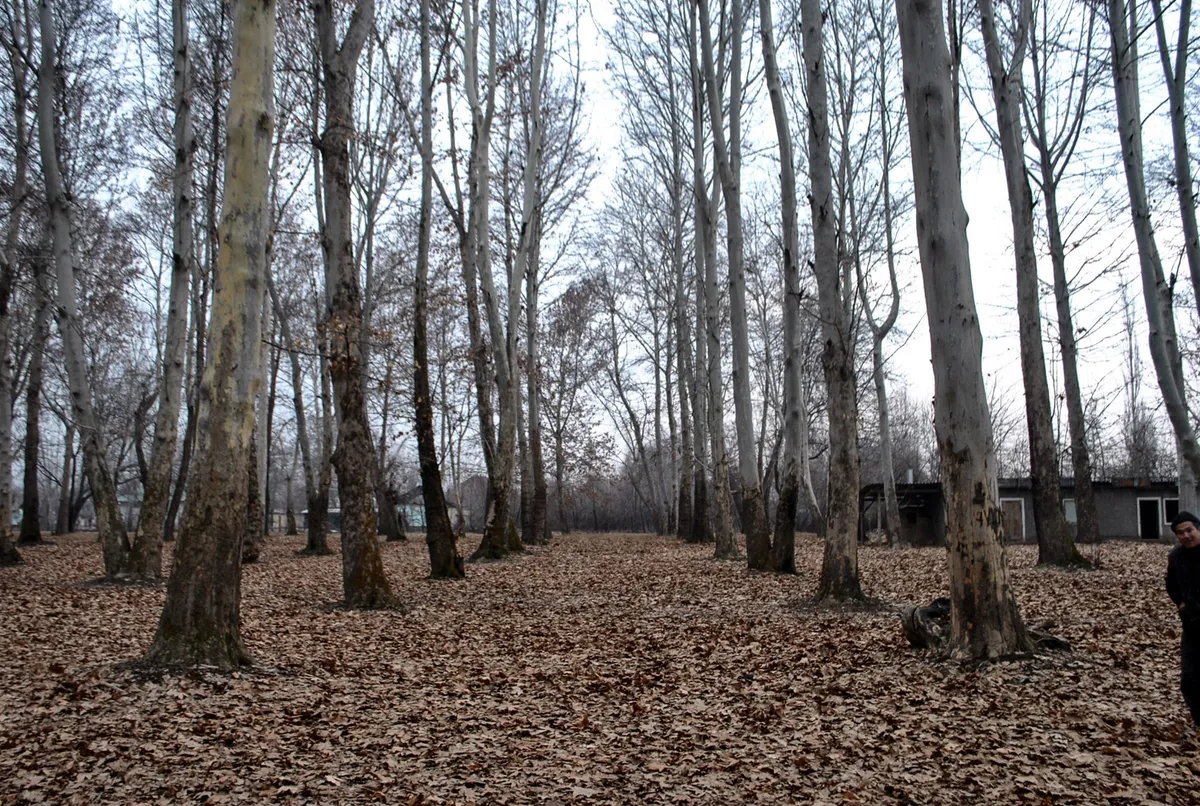 Caption: A park's caretaker, far right, approaches to find out why we are trying to break into a yurt near Osh, Kyrgyzstan
Generally I narrate my life story back to myself with me as a protagonist. But if everyone’s doing that, the people we meet on the road may cast me as the idiot, the callous foreigner, the terror. They might even have good reasons to do so.
We’re commonly asked “what bad things have happened to you,” or “haven’t you been scared?” I too can hardly help myself from asking this when I meet others who have visited places I classify as dangerous on my ever-changing sliding scale.
But there’s another side: I know I’ve frightened and offended many people, and must assume that there have been others that I just don’t remember. When I think “sometimes, we are the terrors,” this is why:
In Kenya
In Kenya two boys made me cry when they flung a hard mud cake at the back of my neck. But I have made more people cry in East Africa than the reverse.
To some children, I am a monster. They are walking ahead of me on the road, or peeking out from the corner of a single-story building, and start to scream and cry. Some get used to me if I make no sudden moves, their eyes remaining wide but their tears drying. Others are inconsolable. The older children or adults nearby may laugh at them or even drag the child towards me or thrust the screaming baby near my face. I feel bad for their fear, but also giggle.
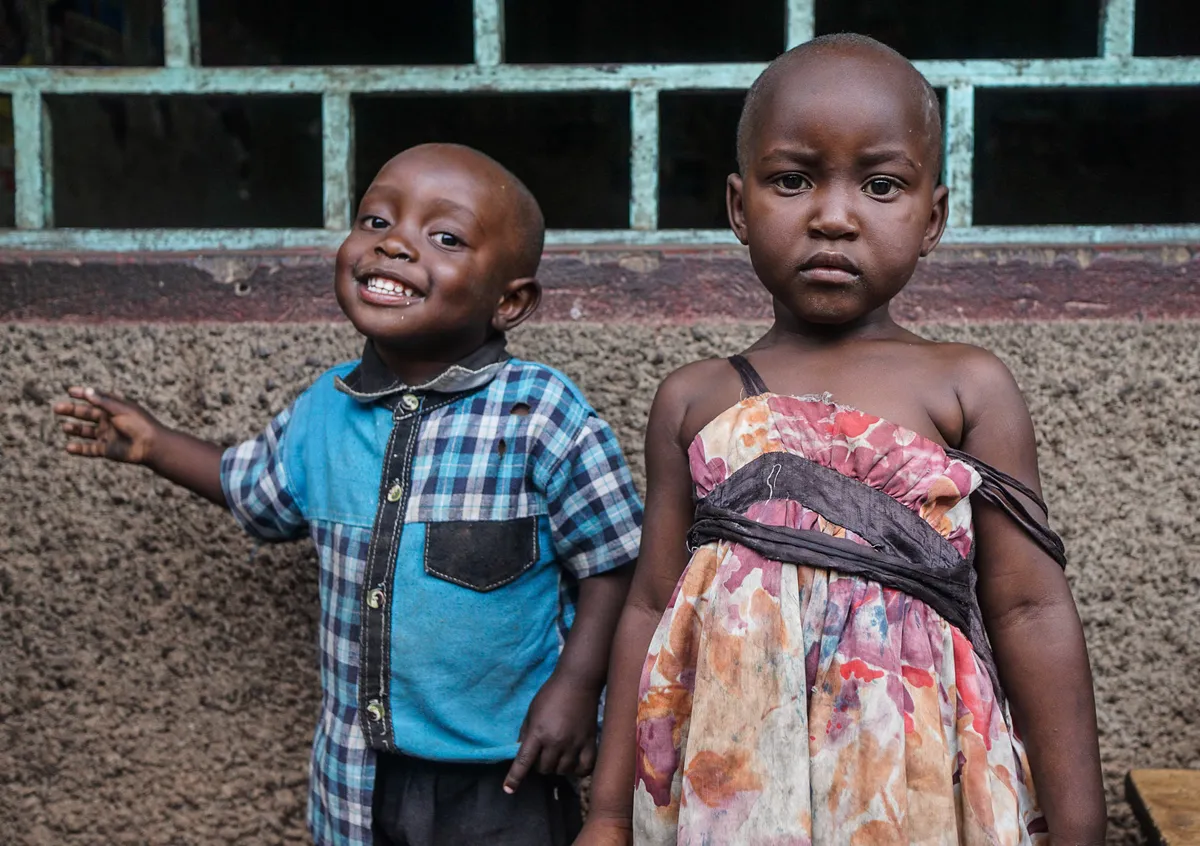 Caption: Kids have different opinions towards us, illustrated by these two in Masindi, Uganda
Imagine you’re walking to kindergarten without your parents, down the path from your home to the road. And then in your family’s plot of cabbages and leafy greens there’s two dirty foreigners sitting on the ground with their tent and all their stuff sprawled here and there. The foreigners didn’t ask, you don’t know when they plan to leave or why they are there. On this quiet morning, none of your neighbours are around to protect you from these outsiders.
This happened during one of our trespasses in Kenya, on the cold and dusty Mau Escarpment. The two small girls in blue and white school uniforms didn’t cry. But they barely met our eyes and wouldn’t return our greetings as they hurried past us.
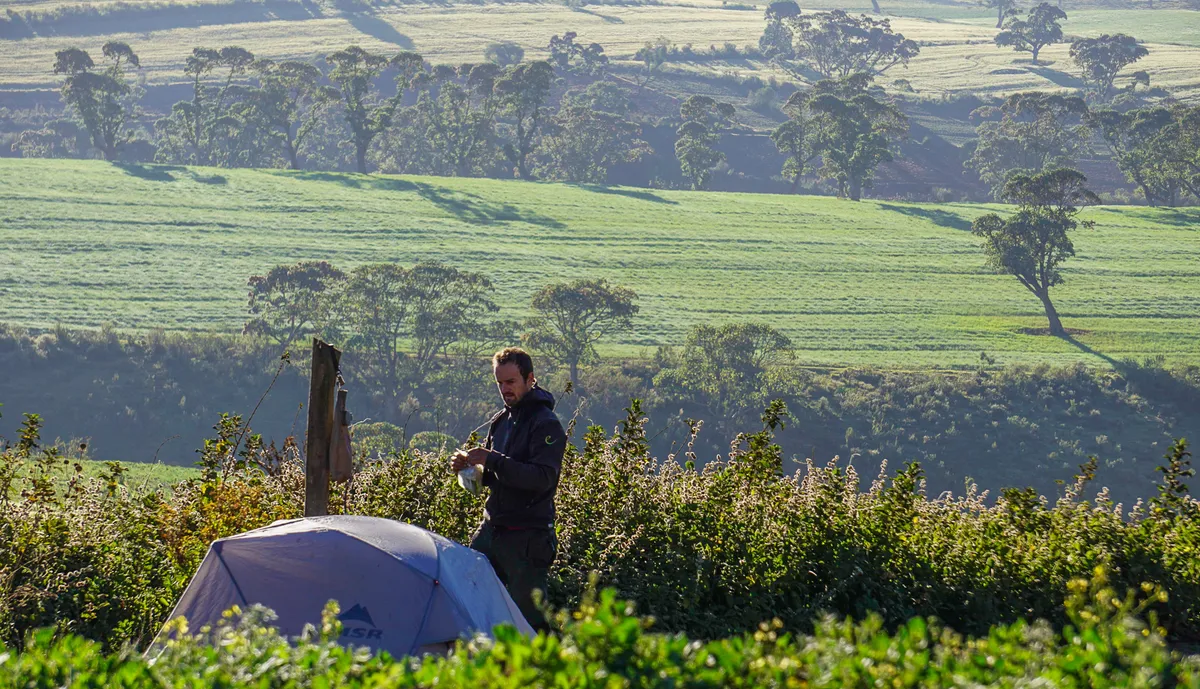 Caption: A cold sunny morning camped out in the corner of a field on the Mau Escarpment, near Lake Naivasha, Kenya
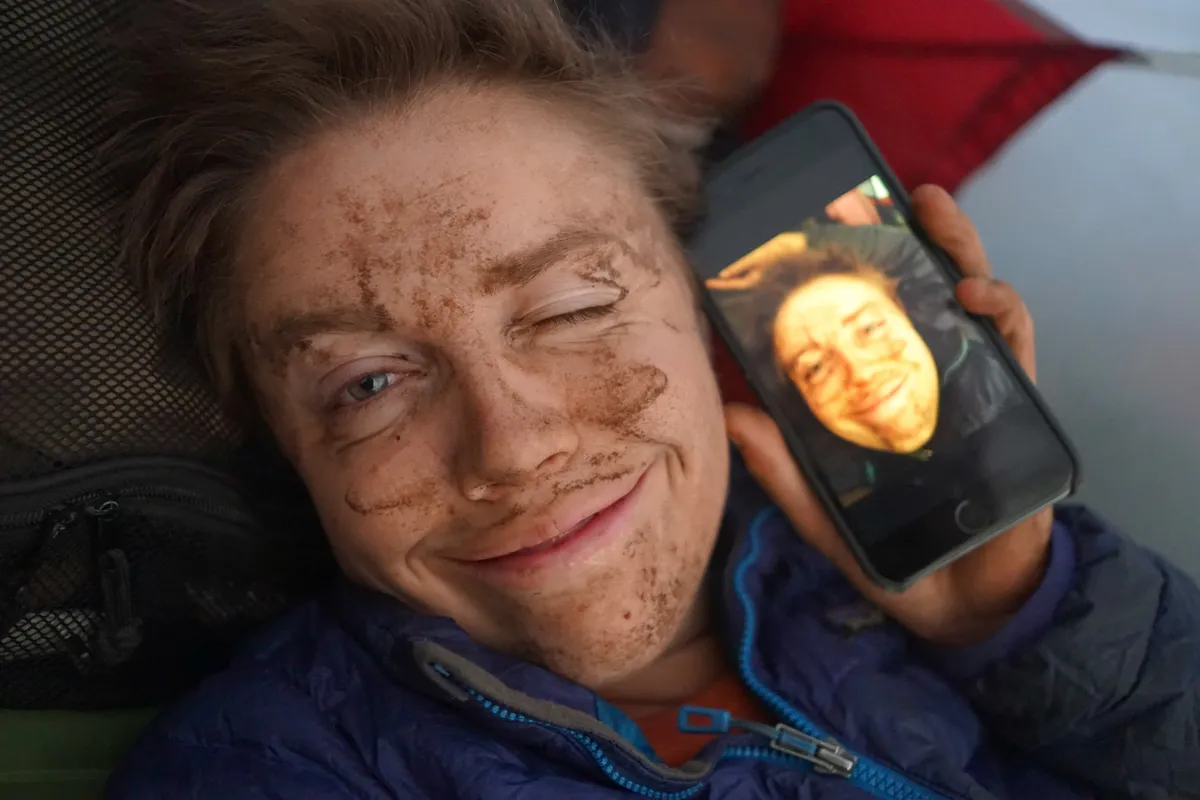 Caption: This was the face I greeted two young girls with when they found us trespassing on their farm. Dirty, scary foreigner!
In Tanzania
I have been mean towards people who were in the wrong place at the wrong time. On one physically challenging day, I remembered what a woman we’d met had said about her cycle through Tanzania: “I barely used my tent because people welcomed me into their homes.” We weren’t having much luck finding a place to camp and began to ask one family after another if we could put our tent near their home. Evan and I took turns receiving:
“No.”
“No, ask the head man.”
“I’ll take you to the head man, how much will you pay me to take you?”
“No.”
This last “no” came at dusk from a gathering of people outside a small home just before the road turned and climbed once again. I pressed my face down into the pages of my Swahili phrasebook and began to cry. Then I ignored their responses to my tantrum and pedalled away, intentionally and vindictively melodramatic. It was beyond me to consider that they could have been punished for hosting visitors overnight without permission from their community leader.
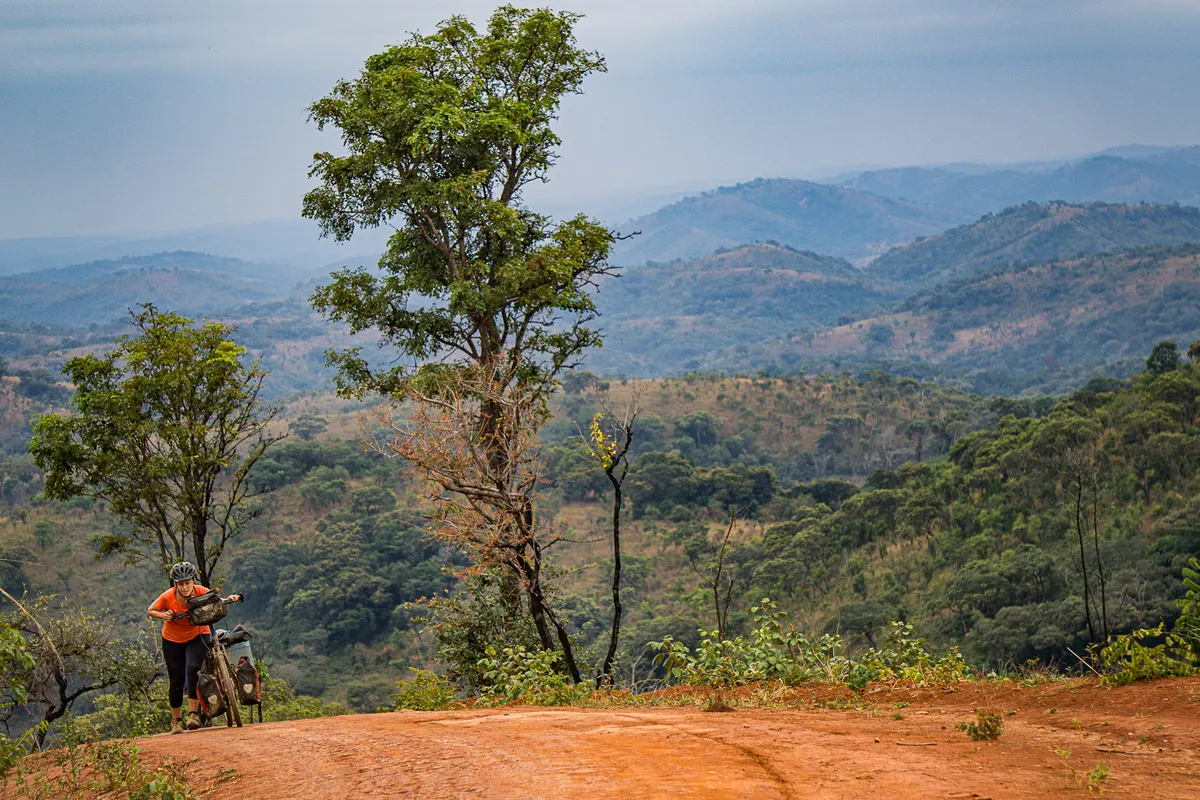 Caption: Getting grumpy and feeling guilty about it, walking my bike through southern Tanzania. A few hours later I was taking out my frustrations on whoever we met.
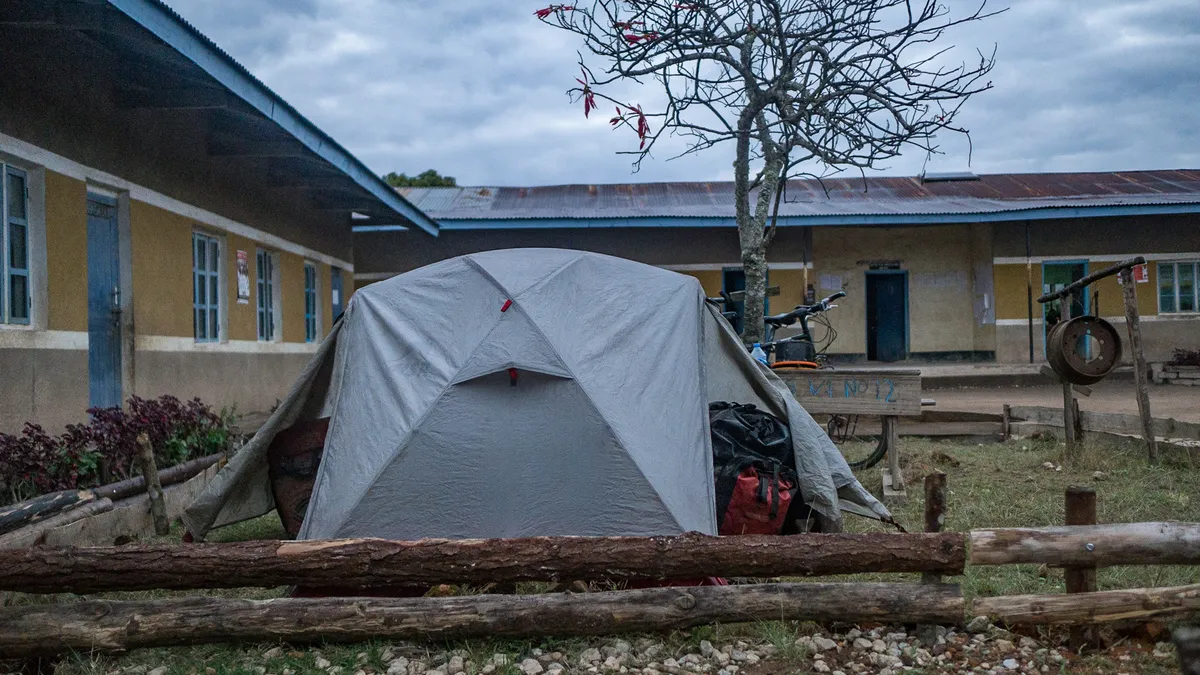 Caption: This is cliche, but after "no, no, no" we got a quick yes to camp at this school in Mfrika, Tanzania and ended the day on a high note.
In Afghanistan, Sort Of
Should you adapt your dress to match local custom? I think yes, but in truth have been inconsistent. I think that the tight shorts and loose t-shirt I wore while cycling through Azerbaijan influenced how men treated me. Though I had a heartwarming experience with a man in Azerbaijan, others asked me for paid sex, like I’d found niche employment: “exotic Anglophone prostitute, will provide own transportation.”
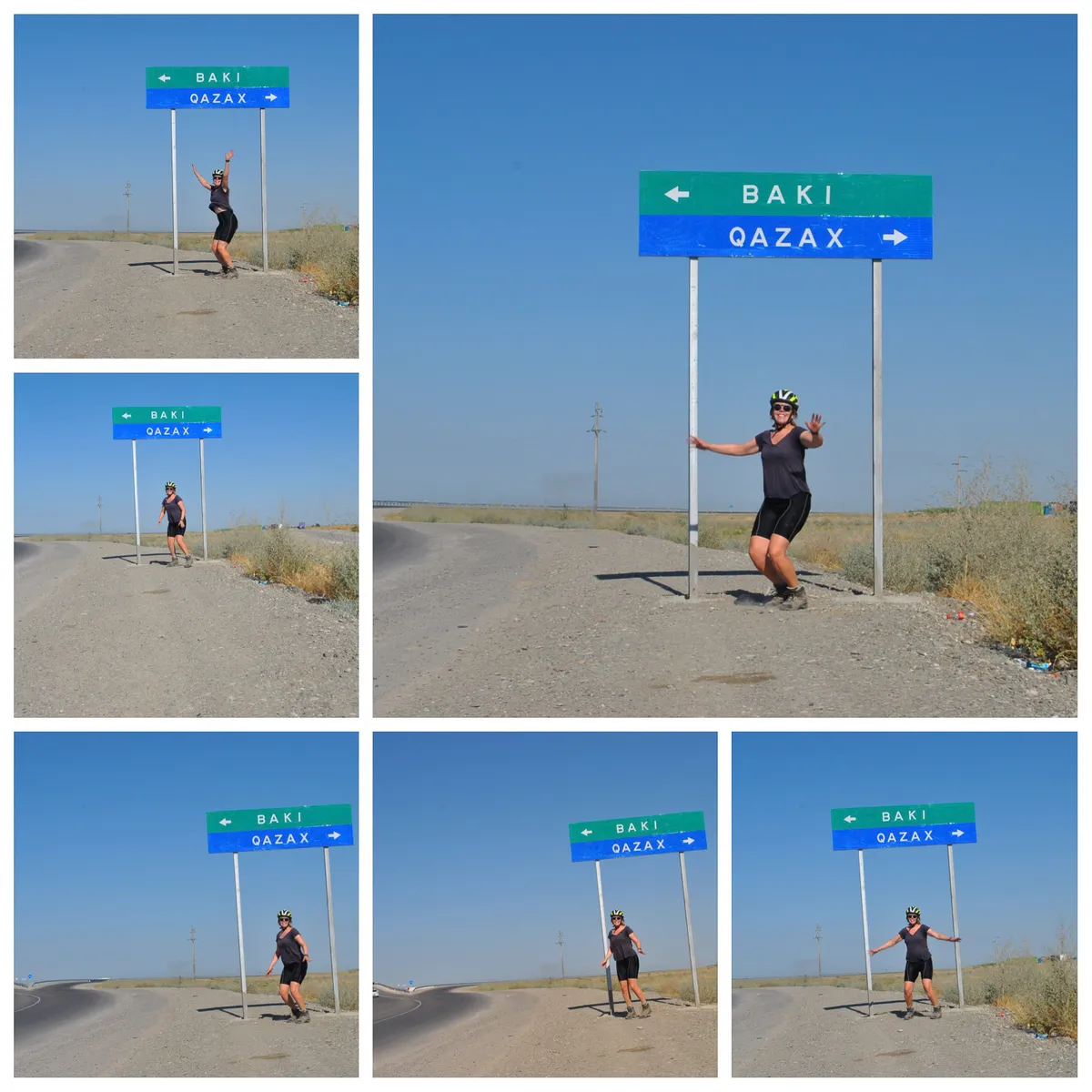 Caption: Baring my belly while trying to get the timing of a jump right in Azerbaijan
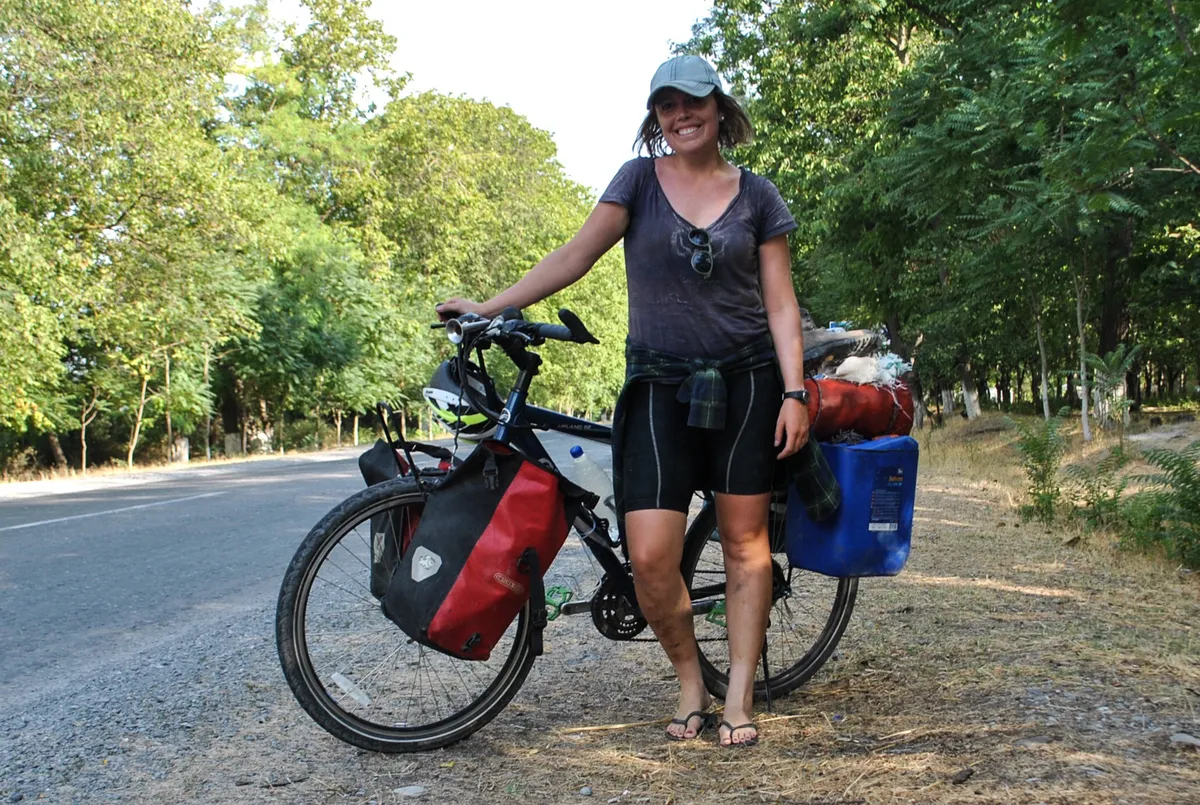 Caption: My daily uniform in Azerbaijan: tight cycling shorts, sweaty t-shirt
Though I don’t think what someone wears should be an excuse for behaviour that intimidates them, I accept that my choices have consequences in the world as it is today, as I suspect it has always been. I mention Azerbaijan to emphasize the other side: how we make mistakes that contradict local customs, and are so often given the benefit of the doubt. Not that I would do the same again:
On a sunny afternoon cycling along the Panj River, Ilona and I managed to break cultural and military rules in quick succession by camping next to this surging brown river that separates Tajikistan from Afghanistan.
We were very happy with the quiet, scenic and secluded spot that we had reached by walking our bicycles down a steep rocky slope. I scrunch my eyebrows now looking back, confused, but at the time it didn’t seem strange to sun ourselves topless on a large rock before we cooked dinner. I suppose we thought we were alone.
On both sides of the Panj River the roads look unlikely, snaking through rock and scree, but other things are different across the border: On the Afghanistan side, dress is more conservative, especially for women. And for reasons that I don’t know, we saw many more motorcycles navigating these fragile roads on the Afghanistan side.
We heard the tinny, blaring music of one of these motorcycles approaching. From across the river we saw the man driving it and the woman behind him, her full-body covering billowing. They got a good look at us sitting up, clutching our clothes over our chests in the sun. They simply gave us a big wave and continued on.
The next morning we were spotted by two Tajik soldiers on foot patrol. They evicted us from our camp spot—we were not supposed to be between the road and the river—but they let us finish our oatmeal first, albeit quickly.
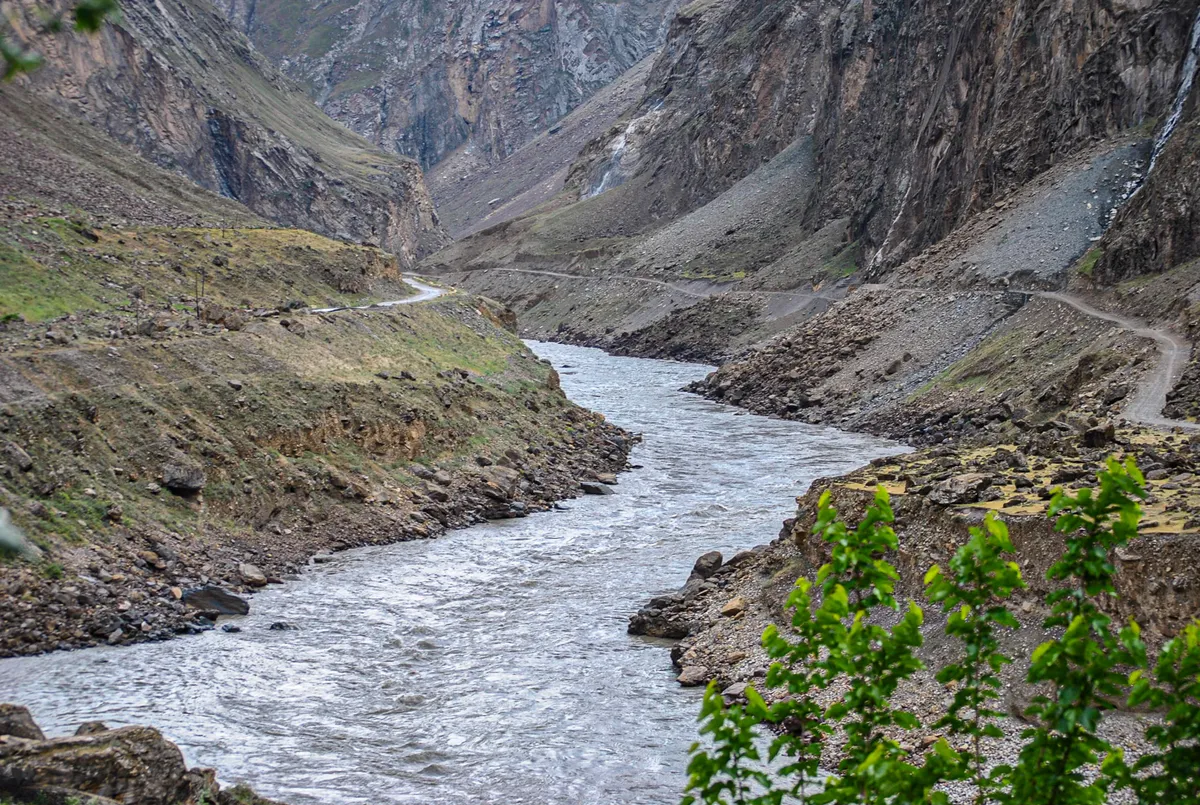 Caption: The Panj, separating Tajikistan (right) from Afghanistan (left)
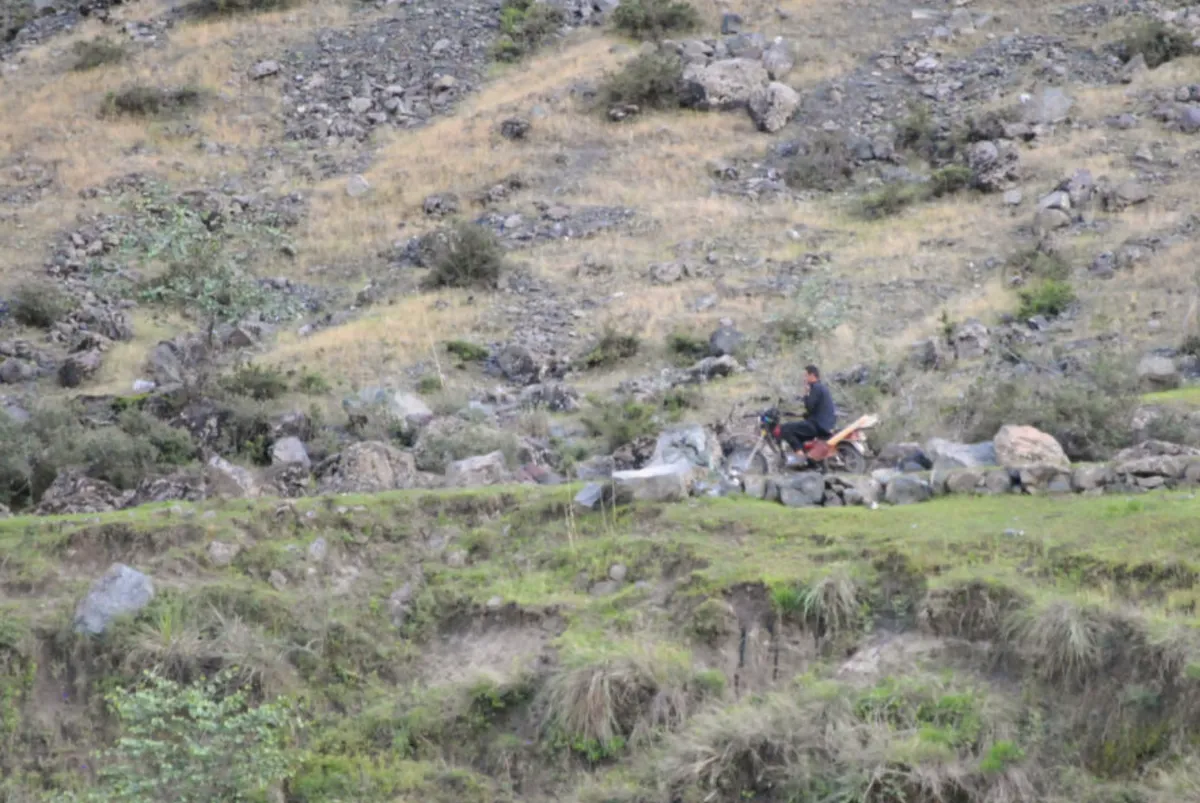 Caption: Watching the motorcycles pass by from our camping spot across the river.
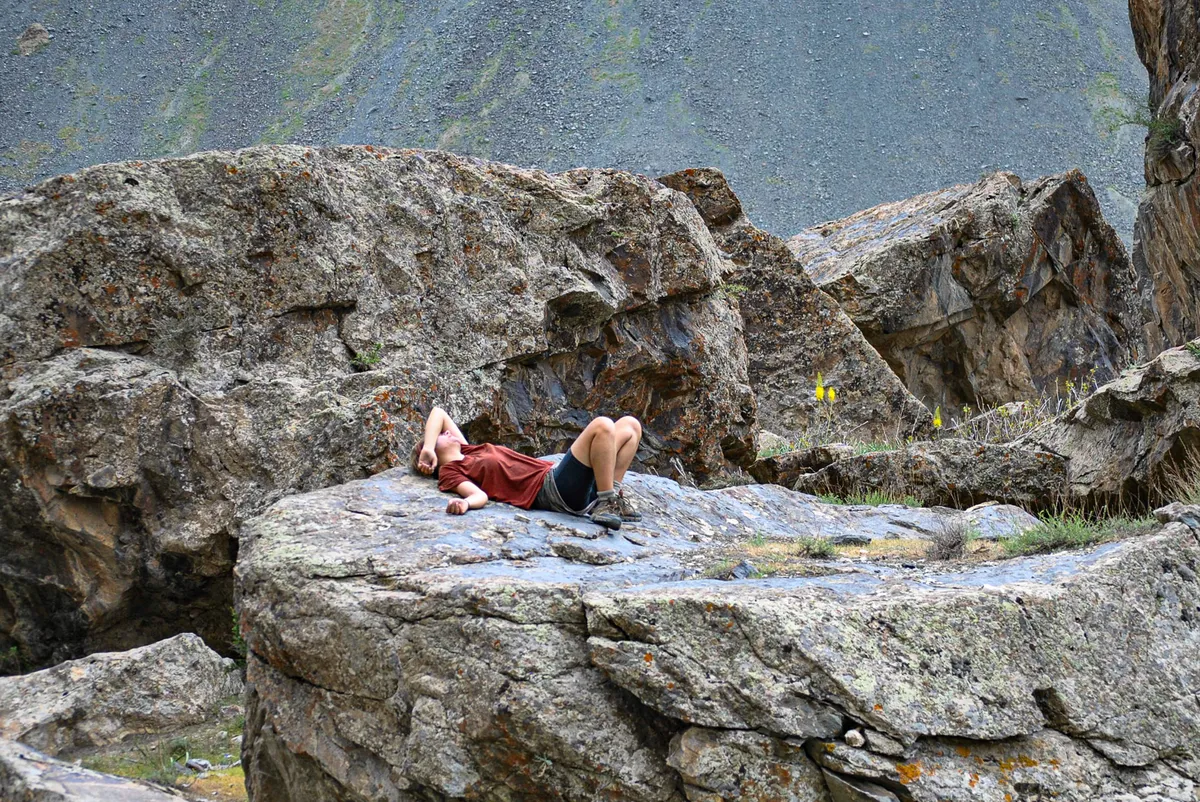 Caption: On other rocks, we basked with (more) appropriate clothing
Most Of All, In Kyrgyzstan
What’s a Kyrgyz story without a yurt? We were caught trying to break into one, and this is the best example I have in my portfolio of things I’ve done that I feel sheepish about.
During Kyrgyzstan’s cold winters, some open-air restaurants and picnic areas go into hibernation. In a small town not far from Osh, we saw an empty park blanketed in brown leaves shed by naked trees in neat rows. Because of the orderly trees, you could see far into the park, it felt too exposed for camping. We turned our attention to a large concrete yurt built around a tandoor oven. In the spring and summer when the trees were green, I imagined smells of fresh nan and pilau wafting from the yurt, tempting visitors.
Evan cut the wire, I kept watch. This felt illicit but we also felt tired and cold. When I saw a boy looking at us from across a small canal, I hissed at Evan to pause, to pretend we were doing something else. When a few minutes later a man with quiet brown eyes crunched his feet through the leaves, I pretended I was taking photos of the trees. Though I treated him like an idiot, he was not.
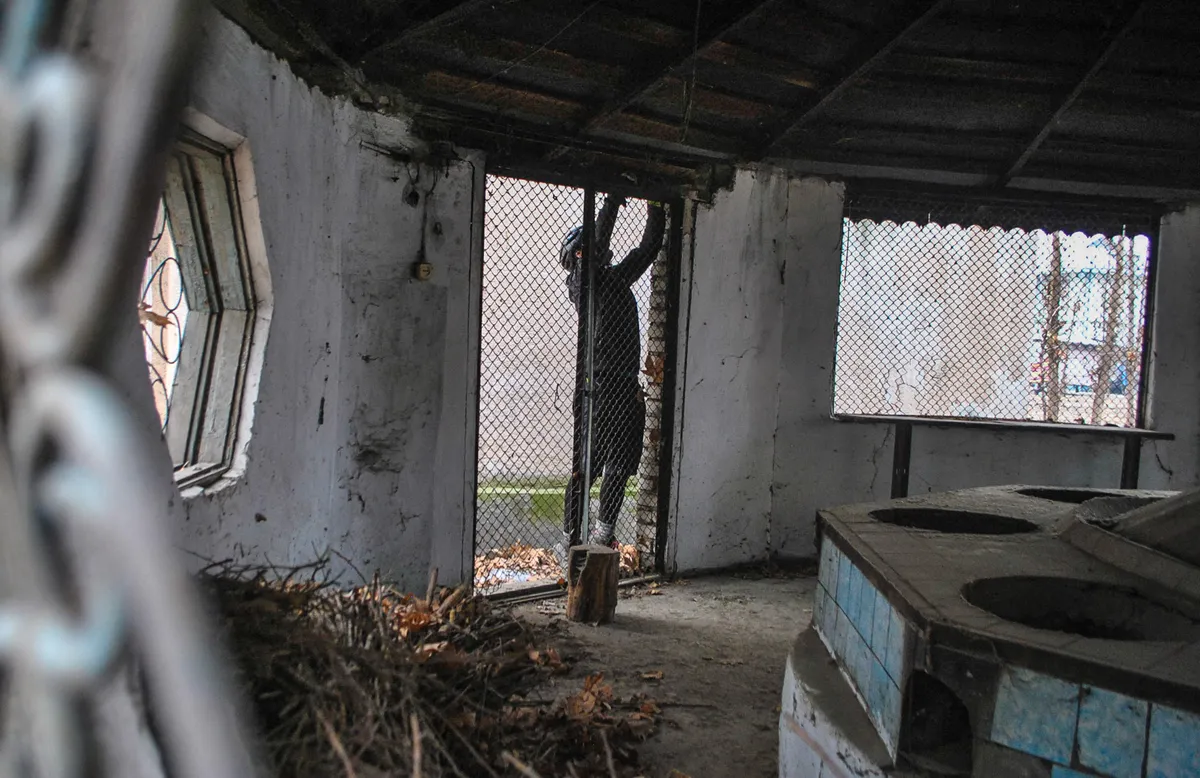 Caption: Evan getting us into the kitchen yurt near Osh, Kyrgyzstan
He had come from across the canal where the boy had been, from the house nearest the park. In a level voice matching his quiet eyes, he explained that he was the park’s caretaker, which included the yurt we were now vandalizing. It was hard to meet his gaze.
What would I have done, if faced with someone actively breaking into properties I was supposed to protect?
He led us out of the park, back to the road to bypass the canal. He took us home: through the metal gate, down the driveway and through the front door to introduce us to the family. We were brought upstairs to warm up and set up our night’s nest of colourful, heavy Kyrgyz blankets. Then we were called back downstairs to sit on the floor in a circle and share bread, jam, butter, meat, tea for dinner.
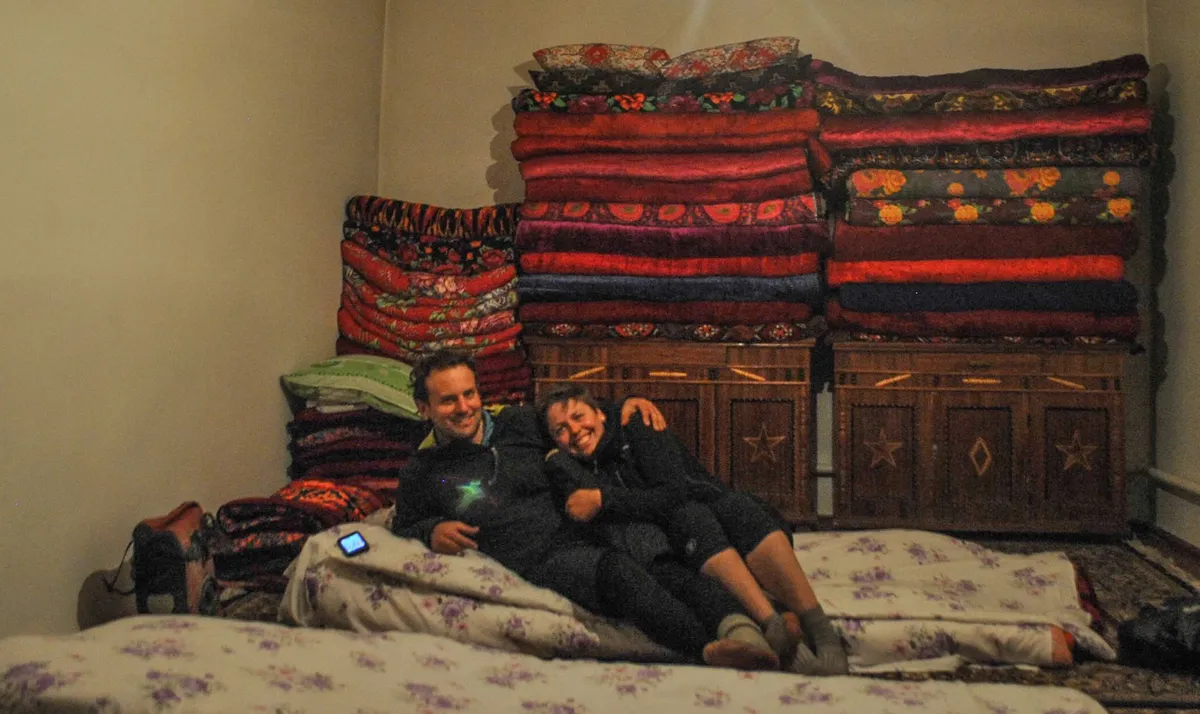 Caption: Warming up before dinner in the home of our very forgiving hosts
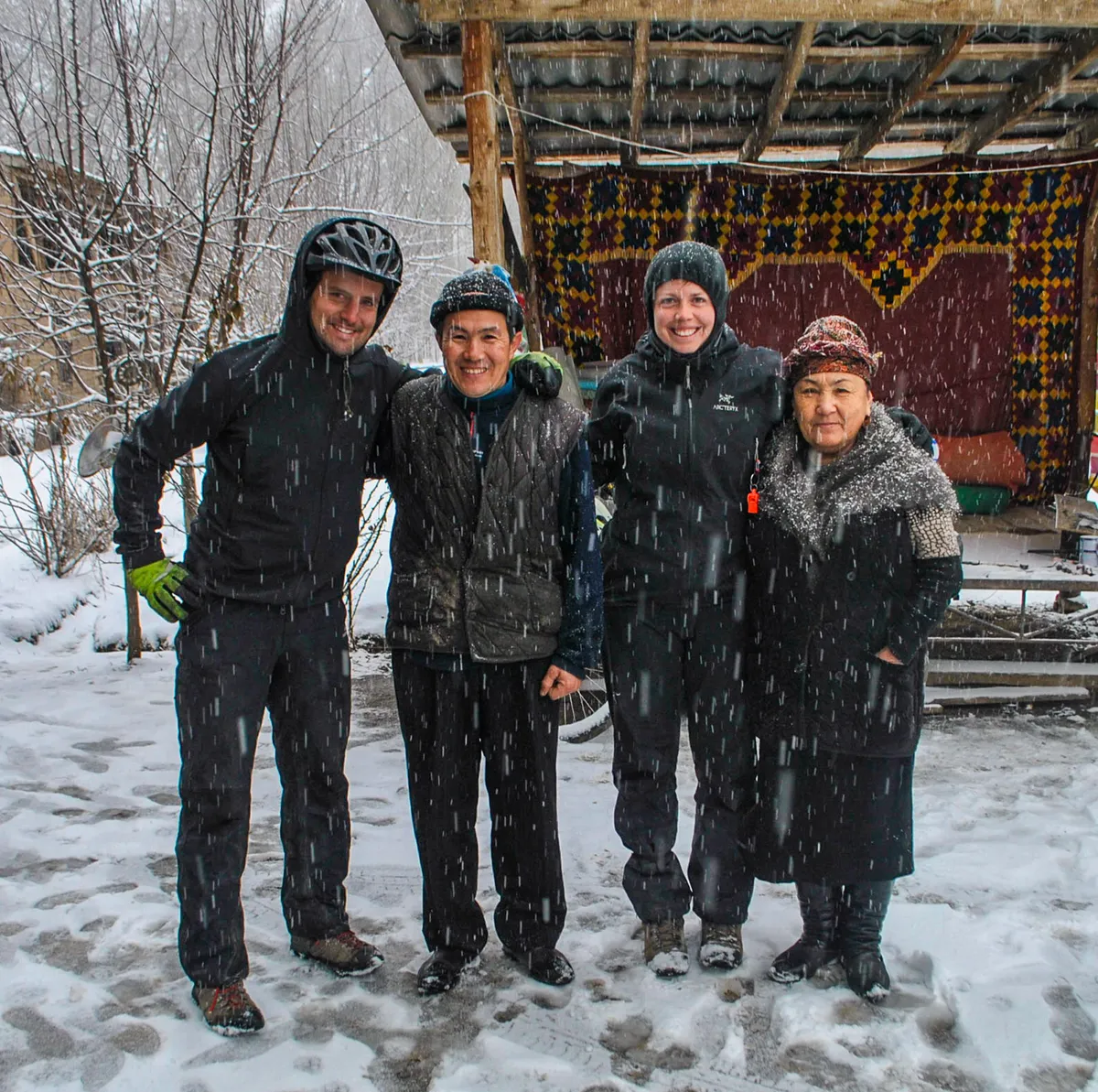 Caption: The caretaker, his wife, Evan and I as we prepare to leave their home
I can’t remember if we managed to give him some Kyrgyz som the next morning as we said our goodbyes under falling snow. I hope we did. I do remember he was hesitant to accept anything, even money to replace the wire we’d cut.
And I’m so grateful to share these memorable, weird, flawed stories with you, but I’m also writing for them for myself as a reminder. Because I do often fear others—other people, other animals, other cultures, other ideas that I feel threatened by. I can’t help but feel it’s useful to flip my perspective on its head sometimes, reflecting my appearance and actions back to myself as if through a mirror, as close as I can get to the eyes and mind of these others.